
Mount Lu
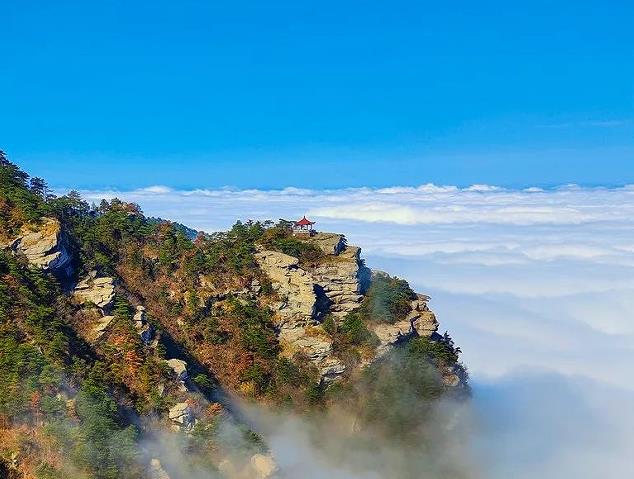
Mount Lu, or Lushan, is an oval granite and fault-block massif about 25 km long and 10 km wide in Jiujiang, Jiangxi, rising to Hanyang Peak at 1,474 m beside the Yangtze River and Poyang Lake. For much of the year its summits float above a sea of clouds, a spectacle lasting nearly 200 days that has inspired countless poems, among them Su Shi's famous lament that one cannot know the true face of Lushan while standing upon it. Long a spiritual crossroads, the mountain saw the monk Huiyuan found Pure Land Buddhism and Donglin Temple here around AD 400, and it later hosted Daoist temples, the Confucian White Deer Grotto Academy revitalised by Zhu Xi, and even Christian missions. Its sheer cliffs, hidden valleys and more than a hundred waterfalls include the celebrated Three Tiled Springs. Inscribed by UNESCO in 1996 as a cultural landscape, Lushan also served as a summer retreat for Western missionaries at Kuling and as the summer capital of Nationalist China, and it was the setting of Mao Zedong's three pivotal party conferences. Fine cloud-mist tea is still grown on its slopes.
- Region
- Jiangxi, China
- Model area
- ≈ 416 km²