
Hallasan
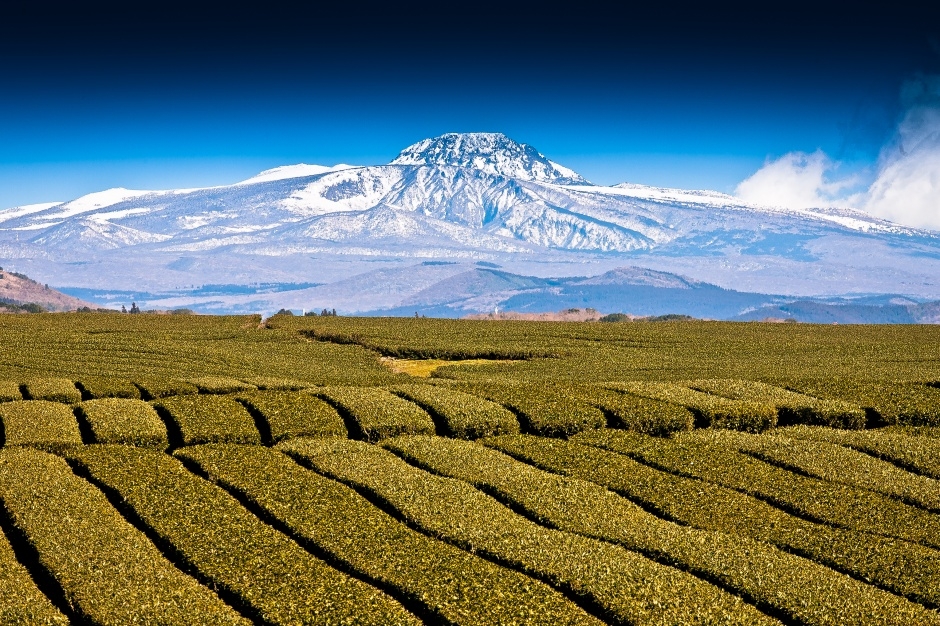
Hallasan, also written Halla-san, is the highest mountain in South Korea, a dormant volcano rising 1,947 m in the centre of Jeju Island. It is the island's and the country's highest peak and the second-highest on the Korean Peninsula, after Changbai Mountain on the China–North Korea border. Built up by successive basalt lava flows, it has gentle slopes studded with more than 360 parasitic cones known on Jeju as oreum, and lava tubes that run for some 14 km. Its summit crater holds Baengnokdam, a lake whose name means white deer lake; the last eruption is recorded around the year 1007. Along with Mount Geumgang and Jirisan it is counted among the peninsula's three sacred mountains. A full sequence of vertical vegetation zones climbs its slopes, and in 2007 it was inscribed with Jeju's volcanic island and lava tubes as a UNESCO World Heritage Site.
- Region
- Jeju, South Korea
- Model area
- ≈ 265 km²